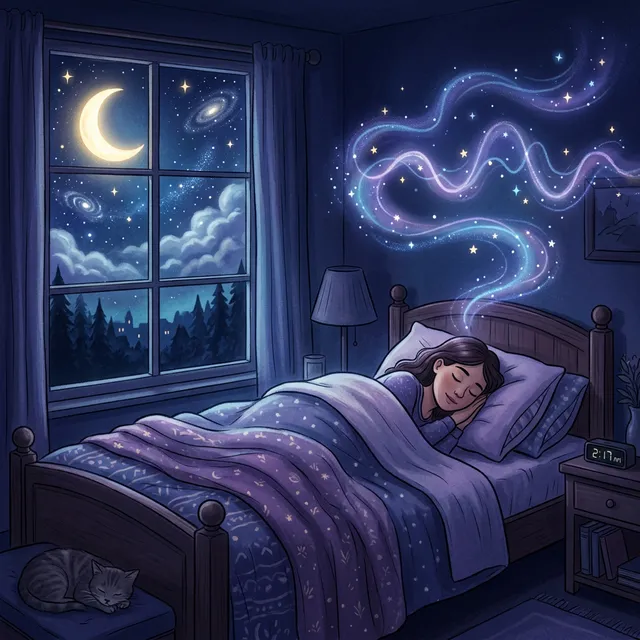
You are tired. Not the kind of tired that a good night's sleep fixes—you have had good nights of sleep, or at least nights that should have been good: seven hours, eight hours, occasionally the aspirational nine hours that sleep evangelists recommend with the fervour of religious converts. You wake up tired. You drag through the afternoon in a fog that no amount of coffee dispels but merely reshapes into a jittery, anxious tiredness that is measurably worse than the original tiredness it was meant to address. You go to bed tired, fall asleep tired, and wake up tired again. The cycle repeats with such persistence that you have stopped thinking of it as a cycle and started thinking of it as your personality: "I'm just a tired person."
You are not "just a tired person." You are a person whose sleep—despite adequate duration—is failing to provide the restorative functions that sleep is supposed to provide, and the reasons for this failure are, in most cases, identifiable, modifiable, and dramatically responsive to intervention. The science of sleep has advanced substantially in the past decade, and the practical implications of that science are both more specific and more actionable than the generic "get more sleep" advice that dominates the wellness conversation. The problem is usually not how much you sleep. The problem is how you sleep—the timing, the consistency, the pre-sleep behaviours, the sleep environment, and the physiological processes that determine whether the hours spent in bed produce genuine restoration or merely unconsciousness.
Sleep Architecture: Why Time in Bed ≠ Sleep Quality

Sleep is not a uniform state—it is a structured cycle of distinct physiological stages, each serving different restorative functions. A complete sleep cycle lasts approximately 90 minutes and progresses through: light sleep (Stage N1, 5-10 minutes—the drowsy transition from wakefulness), moderate sleep (Stage N2, 20-25 minutes—the core of sleep time, characterised by sleep spindles and K-complexes that are associated with memory consolidation), deep sleep (Stage N3, 20-40 minutes—the physically restorative stage, characterised by slow delta waves, during which growth hormone is released, tissue repair occurs, and the immune system is reinforced), and REM sleep (20-25 minutes—the dreaming stage, characterised by rapid eye movement, muscle paralysis, and brain activity patterns that resemble waking consciousness, during which emotional memories are processed and creative problem-solving occurs).
A healthy night of sleep contains 4-6 complete cycles. The distribution of stages changes across the night: early cycles contain more deep sleep (N3), while later cycles contain more REM sleep. This distribution is critical: if you go to bed at midnight and wake at 6 AM, you get approximately 6 hours of sleep—but you get the deep sleep-heavy early cycles that provide physical restoration. If you go to bed at 2 AM and wake at 8 AM, you also get 6 hours—but you miss the later REM-heavy cycles that provide emotional processing, cognitive consolidation, and the subjective feeling of being mentally refreshed. Same duration, different quality, different outcomes.
The most common pattern among chronically tired people who sleep "enough" hours is disrupted sleep architecture—specifically, insufficient deep sleep and/or insufficient REM sleep. The causes are predictable and addressable: alcohol (which is sedating but suppresses REM sleep—you pass out but don't dream, producing sleep that is quantitatively adequate and qualitatively hollow), late-night screen use (blue-enriched light from screens suppresses melatonin production, delaying sleep onset and reducing deep sleep proportion), inconsistent sleep timing (going to bed at different times on weekdays and weekends disrupts the circadian clock that regulates sleep stage distribution), caffeine consumption after 2 PM (caffeine's half-life is 5-6 hours, meaning a 4 PM coffee is still at 50% strength at 10 PM), and sleep environment issues (temperature too high, light intrusion, noise disruption).
Circadian Rhythm: Your Internal Clock Is More Important Than Your Alarm
Your body maintains an internal 24-hour clock—the circadian rhythm—that regulates sleep timing, hormone release, body temperature, and cognitive performance across the day. This clock is set primarily by light exposure: bright light (especially blue-enriched light from the sun or screens) signals "daytime" to the suprachiasmatic nucleus (the brain's master clock), suppressing melatonin and promoting alertness. Dim light and darkness signal "nighttime," triggering melatonin release and promoting sleepiness. The clock runs on approximately a 24.2-hour cycle (slightly longer than 24 hours), which means it must be reset daily by environmental light cues—this is why jet lag occurs (your clock is set to the wrong timezone) and why consistent daily light exposure is essential for stable sleep.
The single most impactful sleep intervention—more effective than any supplement, any app, any mattress, any sleep technique—is consistent wake time and morning light exposure. Wake at the same time every day (yes, including weekends—the "sleep in on Saturday" habit shifts your circadian clock, producing the equivalent of jet lag every Monday morning). Within 30 minutes of waking, expose yourself to bright light—ideally outdoor sunlight, which provides 10,000-100,000 lux (the intensity that effectively resets the circadian clock). On overcast days or in winter, a 10,000-lux light therapy lamp (available for ₹3,000-8,000) provides adequate light intensity in 20-30 minutes of exposure during breakfast or morning coffee.
The Evening Protocol: What to Do (and Stop Doing) Before Bed
The 90 minutes before sleep constitute the most critical period for sleep quality, and most modern evening routines systematically sabotage the physiological preparation for sleep that should occur during this window:
Screens: The blue light emitted by phone, tablet, and laptop screens suppresses melatonin production by up to 50% and delays melatonin onset by up to 90 minutes. The content consumed on screens—social media (emotionally stimulating), news (anxiety-inducing), work email (cognitively activating)—further impairs the psychological wind-down that precedes healthy sleep onset. The recommendation is: no screens for 60-90 minutes before bed. The objection to this recommendation is: "that's not realistic, screens are how I relax in the evening." The counter-objection is: if screens are how you "relax" and you are chronically tired despite adequate sleep duration, the screens are not relaxing you—they are sedating you into a state that looks like relaxation but does not produce the melatonin release and psychological deactivation that precede restorative sleep. Replace screens with: reading a physical book, listening to a podcast or music, gentle stretching, conversation, or deliberate boredom (which your brain will resolve into sleep more effectively than any screen-based activity).
Temperature: Core body temperature must drop by 1-2°C to initiate sleep—this is why hot bedrooms produce poor sleep and why a hot shower before bed paradoxically improves sleep (the shower raises skin temperature, triggering vasodilation that accelerates core temperature cooling after you exit the shower). The ideal bedroom temperature for sleep is 18-20°C—significantly cooler than most Indian bedrooms outside of winter. Air conditioning set to 22-24°C with a light blanket is adequate; a fan providing air movement over the skin enhances the cooling effect.
Frequently Asked Questions (FAQs)
Do I really need 8 hours of sleep?
The 8-hour recommendation is a population average, not an individual prescription. Individual sleep need ranges from approximately 7 to 9 hours, determined primarily by genetics. The Goldilocks indicator is not a number but a feeling: if you consistently wake without an alarm feeling reasonably refreshed, and if you can sustain alertness throughout the day without caffeine dependence, you are sleeping enough. If you require an alarm to wake, if you crash in the afternoon, and if you cannot function without coffee, you are either sleeping too little or sleeping poorly. Some people function optimally on 7 hours; some genuinely need 9. Forcing yourself into an 8-hour standard that doesn't match your biology is counterproductive.
Are sleep supplements (melatonin, magnesium) actually effective?
Melatonin: effective for circadian rhythm disorders (jet lag, shift work, delayed sleep phase syndrome) but not for general insomnia. Melatonin is a timing signal, not a sedative—it tells your brain "it is nighttime" but does not force sleep. For people whose circadian rhythm is misaligned (falling asleep too late, waking too late), 0.5-1mg of melatonin taken 2-3 hours before desired sleep time can advance the circadian clock. For people whose sleep timing is normal but whose sleep quality is poor, melatonin provides minimal benefit. Magnesium: moderate evidence for modest improvement in sleep quality, particularly in individuals with marginal magnesium deficiency (common in Indian diets). Magnesium glycinate (200-400mg before bed) is the best-studied form for sleep. The effects are subtle—not the dramatic "knocked out" experience that some supplement marketing promises, but a modest improvement in sleep onset time and sleep efficiency.
Is it possible to "catch up" on lost sleep?
Partially, but not fully. One or two nights of recovery sleep can restore acute cognitive performance and clear the accumulated adenosine (the neurochemical that builds during wakefulness and produces the sensation of sleepiness). However, chronic sleep deprivation (weeks or months of insufficient sleep) produces health effects—increased inflammatory markers, impaired immune function, insulin resistance, elevated cortisol—that are not fully reversed by recovery sleep. The metaphor that researchers use is debt: you can pay off a few nights of sleep debt with a few nights of good sleep, but chronic sleep debt accumulates interest (in the form of health consequences) that simple principal repayment cannot address. The solution is not periodic catch-up but consistent adequate sleep as a non-negotiable daily practice.



Comments (0)
Be the first to share your thoughts on this article.