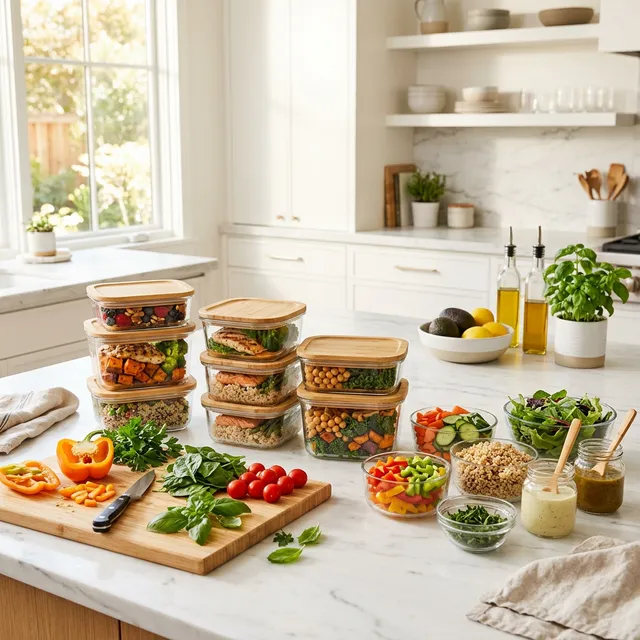
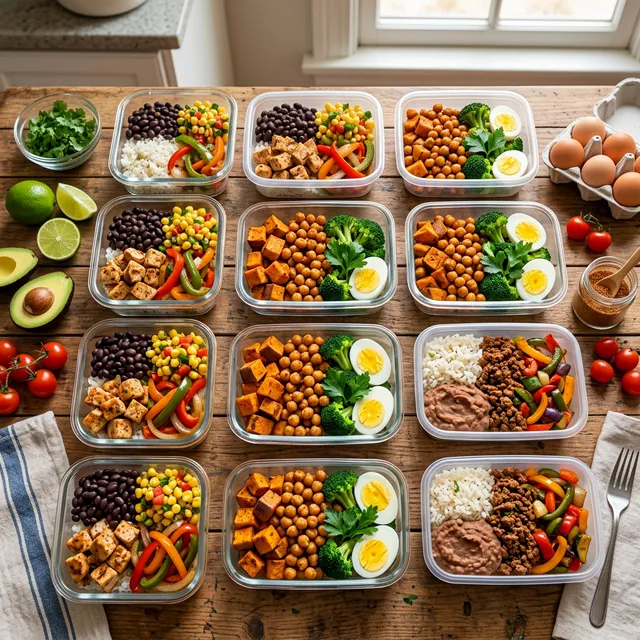
Meal prep has an image problem. The phrase conjures a specific visual: rows of identical plastic containers filled with identical portions of grilled chicken, steamed broccoli, and brown rice, stacked in a refrigerator with the aesthetic warmth of an industrial storage facility. This image—promoted relentlessly by fitness influencers whose bodies suggest they have never experienced the existential despair of eating the same cold chicken and broccoli for the fourth consecutive day—has become the default representation of meal preparation. It is also, I would argue, the primary reason most people try meal prep once, hate it, and never try again. The food is boring. The experience is joyless. The entire enterprise feels like a punishment disguised as productivity.
But the underlying principle of meal prep—reducing the daily cognitive load and time investment of feeding yourself by doing a concentrated batch of cooking—is genuinely valuable, particularly for people whose weekday schedules make daily cooking from scratch impractical. The solution is not to abandon the principle but to fix the execution: to develop a meal prep approach that produces food you actually want to eat, that accommodates variety within structure, and that treats the cooking itself as a pleasurable weekly activity rather than a grim production-line task.
The Framework: Components, Not Completed Meals

The fundamental error of conventional meal prep is assembling complete meals in advance—a finished plate of food that is sealed, refrigerated, and reheated unchanged three days later. This approach eliminates variety (you eat the same meal repeatedly), degrades texture (crispy elements become soggy, fresh elements wilt, sauces are absorbed into grains), and produces the monotony that kills motivation. The alternative approach—component-based prep—solves all three problems by preparing individual components (grains, proteins, vegetables, sauces, toppings) that can be combined in different configurations at each meal.
A single Sunday prep session (2-3 hours) producing: a large batch of cooked grain (rice, quinoa, millet), two cooked protein sources (one dal/legume, one paneer/tofu/egg preparation), two roasted or sautéed vegetable preparations, two sauces or chutneys, and a pickled or quick-fermented component—provides the building blocks for 10-15 distinctly different meals over the following five days. Monday's lunch: rice + rajma + roasted cauliflower + green chutney. Tuesday's lunch: the same rice + the same rajma + different vegetable + different sauce = a meaningfully different eating experience. Wednesday: remaining rice becomes fried rice with vegetables and eggs. Thursday: remaining dal becomes a dal makhani with cream. The components are consistent; the combinations create variety.
The Indian Kitchen Advantage
Indian cuisine is, arguably, the world's most naturally meal-prep-compatible culinary tradition, for three reasons that are so deeply embedded in the cuisine's structure that most Indian cooks don't even recognise them as meal-prep features:
Slow-cooked preparations improve with time. Dal, rajma, chole, sambar, and most Indian curry preparations are better on day two than on day one. The overnight resting period allows flavours to integrate, spices to meld, and the overall flavour profile to deepen in ways that fresh-cooked versions cannot match. This is not a consolation prize for eating leftovers—it is a genuine culinary advantage of batch cooking. The rajma chawal you eat on Tuesday from Sunday's batch is objectively more flavourful than the rajma chawal you would have eaten on Sunday if you had served it immediately.
The spice-based flavour architecture allows variation within consistency. Indian cooking uses a modular spice system: the same base ingredient (chickpeas, for example) can become four entirely different dishes by changing the spice combination: chana masala (North Indian, with cumin-coriander-garam masala), sundal (South Indian, with mustard seeds-curry leaves-coconut), Punjabi chole (with amchur and black tea), or chana chaat (cold, with chaat masala, onion, and lemon). If you batch-cook the chickpeas on Sunday, you can prepare four different final dishes throughout the week with five minutes of additional cooking each day. The prep eliminates the time-consuming step (soaking and boiling legumes); the daily finish provides variety.
Accompaniments provide freshness. Indian meals traditionally include raw or freshly prepared accompaniments—raita (yogurt with cucumber/onion/boondi), kachumber (raw vegetable salad), fresh chutney (coriander-mint-green chilli), pickle (which keeps indefinitely), papad (cooked in 30 seconds)—that provide the freshness, crunch, and brightness that contrast with the richness of the prepped main dishes. These accompaniments take 2-5 minutes to prepare and transform a reheated dal-rice meal from "leftovers" into "a complete Indian meal."
The Practical Three-Hour Sunday Session
Here is a realistic Sunday meal prep session for an Indian household, designed to produce weekday lunches and dinners for one or two people. Total active cooking time: 2.5-3 hours. Total yield: approximately 12-15 meals.
Hour 1 (Grains and Legumes): Start rice in a pot or rice cooker (30 minutes hands-off). Simultaneously pressure-cook two legume dishes: one dry (chana or rajma—higher protein, good for standalone meals) and one wet (toor dal or moong dal—pairs with rice, stores well, reheats perfectly). While the pressure cooker runs (15-20 minutes), prepare the spice bases for both dishes. Season and finish both legume preparations. Outcome: 5-6 cups cooked rice, 4 cups cooked chana/rajma, 4 cups dal.
Hour 2 (Vegetables and Proteins): Roast a large sheet pan of mixed vegetables—cauliflower, sweet potato, carrots, bell peppers—tossed with oil, salt, and a simple spice mix (cumin, coriander, turmeric, chilli). While the vegetables roast (30-40 minutes), prepare a paneer or tofu preparation on the stovetop (paneer bhurji or palak paneer: 20 minutes). Simultaneously boil 6-8 eggs for quick protein additions throughout the week. Outcome: one large batch roasted vegetables, one paneer/tofu dish, 6-8 boiled eggs.
Hour 3 (Sauces, Chutneys, Assembly): Prepare two sauces or chutneys: a green chutney (coriander, mint, green chilli, lemon—5 minutes in a blender) and a tomato-based multipurpose sauce (onion, tomato, ginger-garlic, basic spices—15 minutes). Quick-pickle one vegetable (onions in vinegar with salt and chilli, or carrots with mustard seeds—5 minutes prep, then the pickle develops flavour over the week). Portion everything into containers. Outcome: two sauces/chutneys, one pickle, everything containerised.
Storage, Reheating, and Food Safety
The food safety rules for meal prep are straightforward and non-negotiable: cool cooked food to room temperature within 2 hours of cooking (dividing large batches into smaller containers accelerates cooling), refrigerate immediately once cooled (4°C or below), consume refrigerated preparations within 4-5 days (dals and grain-based dishes keep well for 5 days; vegetable preparations are best within 3-4 days), and freeze anything you won't eat within that window (most Indian preparations freeze excellently for 2-3 months). Reheat to 74°C or above (steaming hot throughout, not merely warm) before eating. Glass containers are preferable to plastic for storage and reheating (no chemical leaching concerns, better at maintaining food quality, easier to clean).
Frequently Asked Questions (FAQs)
I find meal prep boring. How do I make it more engaging?
Two strategies: first, treat the cooking session itself as a pleasurable activity rather than a chore—put on a podcast or music, pour yourself a drink, and approach the session as a creative exercise rather than a production task. Second, rotate your component selections weekly: this week's grain is rice and this week's legume is rajma; next week, the grain is quinoa and the legume is chole; the week after, the grain is millets and the legume is moong dal. This rotation provides the structural consistency of meal prep (the workflow is the same each week) with sufficient variety that no meal feels like a repeat of the previous week.
How much does meal prep actually save per month?
For a single person in an Indian metro city, meal prepping lunches and dinners saves approximately ₹4,000-8,000 per month compared to eating out or ordering delivery. The calculation: average delivery order cost (₹200-350 per meal) vs. home-cooked meal prep cost (₹50-100 per meal, including ingredients and gas), multiplied by 20-25 meals per month that you would otherwise order. The time investment (3 hours per week) is significant but is offset by the time saved on daily cooking, daily decision-making about what to eat, and the delivery waiting time eliminated.
Can I meal prep if I don't know how to cook?
Yes—meal prep actually requires less cooking skill than daily cooking because the preparations are simpler and more forgiving. A dal is difficult to ruin: boil lentils until soft, add a tadka of oil, cumin, and garlic. Roasted vegetables require cutting and seasoning. Boiled eggs require boiling water. Rice requires a rice cooker or pot with a timer. If you can perform these four operations—boiling, roasting, seasoning, and heating oil with spices—you can meal prep. Start with the simplest possible version (rice + dal + boiled eggs + roasted vegetables + store-bought pickle) and add complexity incrementally as your skills develop.
Common Meal Prep Mistakes to Avoid
Preparing too much variety in one session. The temptation to cook seven different dishes in a single prep session leads to a five-hour cooking marathon that produces exhaustion and a determination to never meal prep again. Start with four components maximum: one grain, one protein, one vegetable, one sauce. As the workflow becomes familiar and efficient, add complexity gradually. The three-hour session described above is a practiced workflow—expect your first session to take four hours, your second to take three and a half, and the process to stabilise at three hours by session four or five.
Ignoring textures. A meal prep that produces nothing but soft foods—dal, rice, cooked vegetables—becomes texturally monotonous by day three. Include at least one crunchy component in your prep: roasted peanuts, papad, crispy onions, toasted seeds, or a fresh kachumber salad prepared daily in two minutes. The crunch provides enough textural contrast to keep the prepped meals interesting over five days.

Comments (0)
Be the first to share your thoughts on this article.